
The goverment has found serious irregularities in the functioning of the National Bank for Agriculture and Rural Development (Nabard), Finance Minister Jaswant Singh said in the Rajya Sabha Tuesday.
The Reserve Bank of India on Tuesday kept key rates unchanged.

Infrastructure bond issuances by commercial banks in the current financial year (FY25) are likely to surpass Rs 1 trillion, almost double that of FY24, market participants said. So far this financial year, banks have raised Rs 74,256 crore via infra bonds. In FY24, the total issuances stood at around Rs 51,081 crore.
With the government proposing to give flexibility to the Reserve Bank of India in fixing prudential limits, bankers expect a cut in statutory liquidity ratio
The 30-share Sensex closed at 19,230 mark up 283 points whereas the 50-share Nifty ended higher by 87 points at 5,699 levels.
M&M, Bajaj Auto, Tata Motors and Hero Moto and Maruti Suzuki from Auto sector surged between 1-4%.

Short-term lending (Repo) rate is unchanged at 8 per cent.

Banks have issued Rs 7.78 trillion worth of CDs in the current calendar year until August 2024, compared to Rs 4.9 trillion in the same period of 2023, registering a 59 per cent growth
With the slack season credit policy due to be announced on April 28, bankers are waiting to see how the Reserve Bank of India reacts to the budgetary proposals on freeing caps on statutory liquidity ratio and cash reserve ratio.
A bill to amend Banking Regulation Act, which will enable RBI to lower the mandatory limits on statutory liquidity ratio for commercial banks, will be introduced in Parliament soon.
Banks are parking funds not just in securities qualifying for maintenance of statutory liquidity ratio (SLR), but also in mutual funds (MFs).

State Bank of India chairman Dinesh Kumar Khara has pitched for tax relief on interest income, saying it would help banks to garner savings that could be used for funding long-term infra projects. Currently, banks are required to deduct tax when interest income from deposits held in all the bank branches put together is more than Rs 40,000 in a year. With regard to savings accounts, interest earned up to Rs 10,000 is exempt from tax.
Ahead of the slack season Credit Policy, Reserve Bank Governor Y V Reddy on Monday met Finance Minister P Chidambaram amidst expectation of monetary measures to contain prices and keep interest rates stable to sustain high economic growth.

The flow of money into Non-Resident Indians (NRIs) deposits witnessed a substantial increase, touching $2.14 billion in the first quarter of this financial year (Q1FY24), compared with $349 million in the same period in FY23. The outstanding NRI deposits rose by $2.5 billion, standing at $141.28 billion at the end of June 2023, up from $138.77 billion in May 2023, according to Reserve Bank of India (RBI) data. RBI released the updated data in the bulletin after almost three months.
A Bill seeking to give more operational flexibility to the Reserve Bank of India in the conduct of monetary policy was passed in Lok Sabha on Friday.

The central bank kept cash reserve ratio unchanged at 4 per cent.
Finance Minister P Chidambaram on Tuesday said the Rs 14,150 crore (Rs 141.50 billion) worth of oil bonds meant for oil marketing companies will be issued within this month.

Short-term lending rate unchanged at 7.75 pc.
The government on Wednesday said the ordinance seeking to empower Reserve Bank to cut Statutory Liquidity Ratio below 25 per cent is expected to be brought in by this month-end or early February.

To neutralise this, RBI has been doing forward swaps

Public-sector banks, including Canara Bank and Bank of India, are tapping the infrastructure bond market. Canara Bank on Tuesday raised Rs 10,000 crore at a coupon rate of 7.40 per cent through 10-year infrastructure bonds. This comes after SBI on July 10 raised Rs 10,000 crore also through infrastructure bonds with a 15-year tenor at a coupon rate of 7.36 per cent.

HDFC chairman Deepak Parekh on Monday said harmonisation of rules between banks and non-banks which reduces the regulatory arbitrage was one of the key factors which influenced the decision for merger between the largest home financier and HDFC Bank. Parekh, who said the merger discussions have happened over the last three weeks, noted that requirements like non performing asset recognition being at par and size-based regulations for non-bank finance companies are among the changes in landscape. Addressing a press conference after the surprise announcement earlier in the day, Parekh said the last three years have seen harmonisation in the regulations which reduce the "regulatory arbitrage" of running a separate home finance company.

State Bank of India (SBI), India's largest lender, is looking to raise Rs 10,000 crore through 15-year infrastructure bonds as early as next week, said multiple sources aware of the development. Market participants expect a coupon in the range of 7.15-7.18 per cent for SBI's upcoming infrastructure bond issuance. This comes as demand for longer-tenor papers has remained strong in recent domestic capital market offerings.

The country's two biggest state-run lenders on Saturday pitched for treating a portion of their gold deposits as part of the mandatory cash reserve ratio (CRR) or statutory liquidity ratio (SLR), both of which banks consider as non-productive.

Their net NPA as a proportion of net advances were 2.2 per cent, compared with 1.7 per during the same period a year earlier.

Banks are preferring instruments with higher premium over government securities for their held-till-maturity (HTM) portfolio, following the new investment norms, which came into effect from April 1. They are stocking up on corporate bonds and state government securities to boost yield on their portfolio, according to market participants. "Definitely, if there is a good spread available and without lower credit risk, those instruments will be favoured to boost the yield on the portfolio.

UCO Bank mulls AT1 offering to raise Rs 1,000 cr.
Leeway on CRR and SLR was a long-standing demand from banks, which the RBI did not agree to till recently.

Banks may reduce their interest rates.

State Bank of India (SBI) may carry out a planned Rs 10,000 crore sale of infrastructure bonds in the market this week, with the securities likely to be of 15-year maturity, sources told Business Standard. SBI, the country's largest bank, had last week said its board had approved the issuance of infrastructure bonds in the current fiscal year. It, however, had not mentioned the maturity of the bonds or when the sale would take place.

The move may release funds locked in government securities and add to liquidity. With inflation expectations lowered, this should not impact bond sentiment in the short run
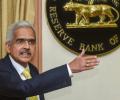
Financial markets are under stress and require steps by the central bank for market stability and revival of economic growth, he said while announcing the decisions taken by the Monetary Policy Committee in Mumbai.
